Top 10 Tips For Pricing And Costing Of Ai Software For Predicting And Analysing Stocks
To maximize the value of your investment, it is essential to understand and compare pricing for AI software that predicts and analyzes stocks. Knowing what you pay for and how the pricing structure could be different. This will help you make an informed decision. Here are the top ten tips to evaluate the price and cost of these platforms:
1. Understanding Pricing Model
Subscription-based platforms: Find out if you have to pay either a monthly or annual cost. Find out the features included with each level.
Pay-per-use : Verify that the platform charges according to the amount of usage (e.g. requests for trades, for information or forecasts).
Freemium model: Check whether there’s a free version with limited features, and a premium version that includes the best features.
2. Compare Pricing Tiers
Examining the features that are included in each price range (e.g. basic professional, professional, and enterprise).
Scalability – Make sure the pricing levels you choose to use are in line with your requirements.
Upgrade flexibility: Find out whether you can effortlessly upgrade or downgrade when your needs change.
3. Evaluate Hidden Costs
Data fees – Check if the platform charges an additional cost to access premium data (e.g. information in real time or advanced analytics).
Brokerage costs Check whether the platform charges additional charges for trading or connect with brokers.
API usage. Determine whether there are any additional costs that come with API access or high-frequency use.
4. Check out free demos as well as trials
Trial period: Try platforms that offer a free demo or trial to try their capabilities.
Examine the limits of a trial trial. Does it offer all features?
You have no commitment options: Make sure you are able to end the trial without having to pay in the event that the service doesn’t meet your requirements.
5. Check for discounts and promotional offers
Annual discounts: Find out what you can avail as discounts on the annual plan compared with monthly plans.
Referral Programs Find out whether your platform offers discounts or credit to users who refer others.
Find out about pricing for institutions when you belong to a large organization.
6. Calculate the Return on investment
Cost vs. value – Decide if the platform’s capabilities, features, and predictions are worth the cost. For instance, does it aid you in making a better decisions in trading or help you save time.
Research the platform’s success rate or testimonials from users to determine its potential ROI.
Costs of other platforms: Compare the cost of the platform to the possible cost of not using it (e.g. not utilizing opportunities, manual analyses time).
7. Review Cancellation and Refund Policies
Cancellation Terms: You can cancel your subscription without any hidden fees or penalties.
Refund policy Check if the platform will refund you for any unused portions.
Auto-renewal Check to determine if your platform renews automatically and learn how you can choose to stop it.
8. Examine Pricing Transparency
A clear pricing page Make sure whether the website has a pricing page which is precise, clear and does not contain any hidden fees.
Customer Support: To clarify unclear pricing information and other charges, call customer support.
Contract terms: Go through the conditions of service to be aware of the long-term commitments and penalties.
9. Compare to Competitors
Comparing the features and prices of platforms with their competitors will allow you to get the most value.
User reviews: Read the feedback of users to determine whether the platform’s price is worth it.
Positioning in the market: Find out whether your platform is advertised as a budget, mid-tier or premium choice. Also, check if the price is in line with your expectations.
10. Evaluate Long-Term Costs
Price increases Review the platform’s history to find out how often it has increased prices.
Check whether there are any new features in your current package or whether you should consider upgrading.
Scalability cost: The platform should be priced reasonably in the event that your trading or data requirements grow.
Bonus Tips
Test out a variety of platforms. You can test them all with a no-cost trial to test their performance.
Negotiate prices: If you have a lot of customers or are part of an organization, you can ask for special pricing and discounts.
There are free educational tools on various platforms.
Utilize these suggestions to determine the cost and pricing for AI platform for analyzing and predicting stocks. Choose one that meets your needs and falls within your budget. A platform priced correctly will strike the right equilibrium between affordability, functional and performance to maximize the value of your trading. Check out the most popular cheap ai stocks for blog advice including stock investment, ai stock, best stock websites, learn how to invest in stocks, ai company stock, best stock sites, learn stock market, learn how to invest in stocks, ai investment bot, top ai stocks and more.
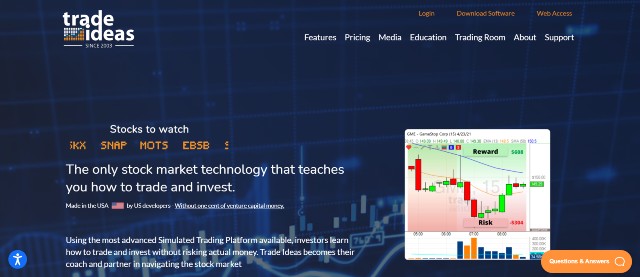
Top 10 Suggestions When Evaluating Ai Trading Platforms For Their Community And Social Features
It is important to understand how users interact, share knowledge and gain insights from each other through analyzing the social and community features of AI-driven prediction and trading platforms. These features are a great method to improve user experience, as well as provide invaluable support. Here are ten suggestions to help you assess the social and community aspects of these platforms.
1. Active User Community
See whether there is a lively community of users that participates regularly in discussion and shares their insights.
Why: An actively-active community is an indication of a community that allows users to learn and grow from one another.
2. Discussion Forums and Boards
TIP: Check the quality and level of participation on message boards or forums.
Why Forums are important: They allow users to post questions, discuss strategies and debate market trends.
3. Social Media Integration
Tip Check to see whether your platform is integrated with other social media platforms like Twitter and LinkedIn to allow sharing of information and updates.
Why social media integration can boost engagement and give real-time market updates.
4. User-Generated Content
Look for features which allow you to create and share content. Examples include articles, blogs or trading strategies.
Why? User-generated content promotes collaboration and gives a range of perspectives.
5. Expert Contributions
Tip – Check whether the platform includes contributions from experts in the field, like market analysts and AI specialists.
Why: Experts’ insights provide credibility and depth for community discussions.
6. Real-Time Messaging and Chat
TIP: Check the possibility of live chat or messaging services for instant communication among users.
The reason: Real time interaction facilitates quick sharing of information and collaboration.
7. Community Moderation and Support
Tip: Assess the level of moderation and support provided in the community (e.g. moderators, moderators, customer support representatives).
The reason: Moderation is essential to maintain a positive, friendly environment. Helping users solve their issues as quickly as they can.
8. Events and Webinars
Tips: Find out whether there are any live events, webinars, or Q&A sessions conducted by experts.
Why: These meetings provide a great opportunity to learn and meet directly with industry professionals.
9. User Review and Comments
TIP: Look out for features that allow users to provide feedback on the platform as well as its community and features.
The reason: Feedback from users can help identify strengths and areas of improvement in the community environment.
10. Gamification and Rewards
Tips: Make sure to check whether there are features that allow for gamification (e.g. badges or leaderboards,) or rewards for participation.
Gamification is a powerful tool that helps users engage more with their friends and with their platform.
Tips for Privacy and Security
Be sure that all community or other social features are backed by strong security and privacy features to protect users’ data and their interactions.
These factors will help you decide if a trading platform or AI stock prediction can provide an open and friendly community to help improve your trading skills and knowledge. See the most popular my website for more examples including ai stock predictions, ai options trading, ai stock trader, stock predictor, investing with ai, investing with ai, ai in stock market, ai for trading stocks, stock predictor, stock predictor and more.